
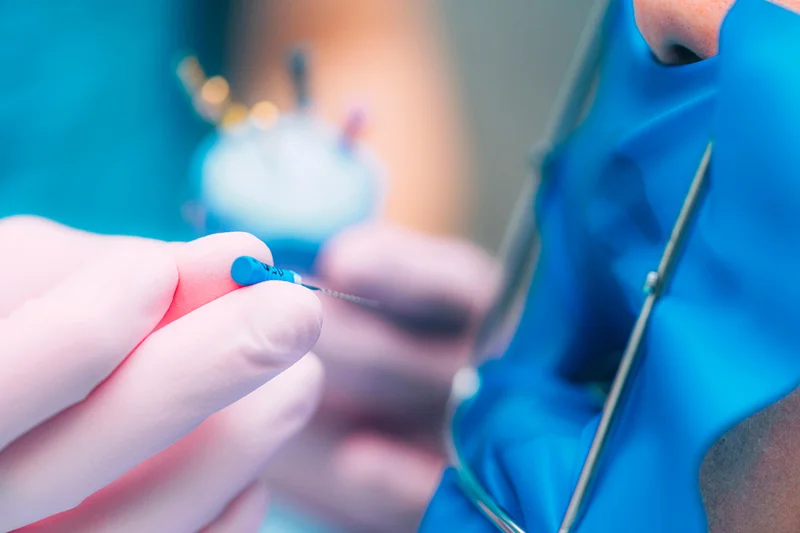
Root canal treatment
Why do we use root canal treatment?
Root canal treatment is a multi-step treatment process that is carried out when the tooth can no longer be retained in any other way. This occurs when the tooth is so damaged that it needs to be removed, whether it is a tooth that has died as a result of trauma or a tooth that has decayed to the extent that it has reached and infiltrated the tooth. Signs of this may include pain on biting, extreme hypersensitivity to cold, spontaneous onset of pain, usually throbbing, or pus in the mouth.
How much time does the treatment take?
This is very difficult to say in advance, as everyone’s body heals at different rates and reacts differently to the substances used in root canal therapy.
What is the process?
The first step is to open the tooth through a trephine opening, under anaesthesia, and then remove the blood vessels and nerves that are still in the tooth. We then disinfect the root canals mechanically and chemically, and apply a temporary root canal seal with medication, which also does the same job. This first treatment usually brings a significant reduction in the patient’s pain.
The tooth is then cleaned again, and once the symptoms have resolved and the root canals are declared free of infection, a permanent root canal filling and a cover filling are applied. If the tooth has not healed, we will place another medicated filling and repeat the process until we can complete the final filling.
Consequences
Root canal treatment results in the tooth dying, as we remove the blood vessels and nerves that feed the tooth if this has not already happened on its own. As a result, the tooth becomes numb and brittle, so we fit a cap and/or crown if necessary to ensure long-lasting retention.
Would it not be easier to pull out?
In each case, the dentist and the tooth’s chances of a successful root canal treatment must be assessed, and the x-ray can help us decide what we can do. If there is little chance of saving the tooth, the dentist will recommend the removal of the tooth and consult on the consequences.